
Free shipping -30% PRO 

Starlight lasers G1 Pro768× sold
G1 Pro Green Laser Pointer, Pattern Lens Included
- Green 532 nm
- 1 mW
- 18650
€99.95€69.95
In stock
Explaining where Cassiopeia or Jupiter is without a pointer is hard work. With a green astronomy laser pointer, the people beside you see exactly what you mean. Here is how to choose and use one.

Our best-selling green laser pointer: rechargeable, lockable, built in aluminium


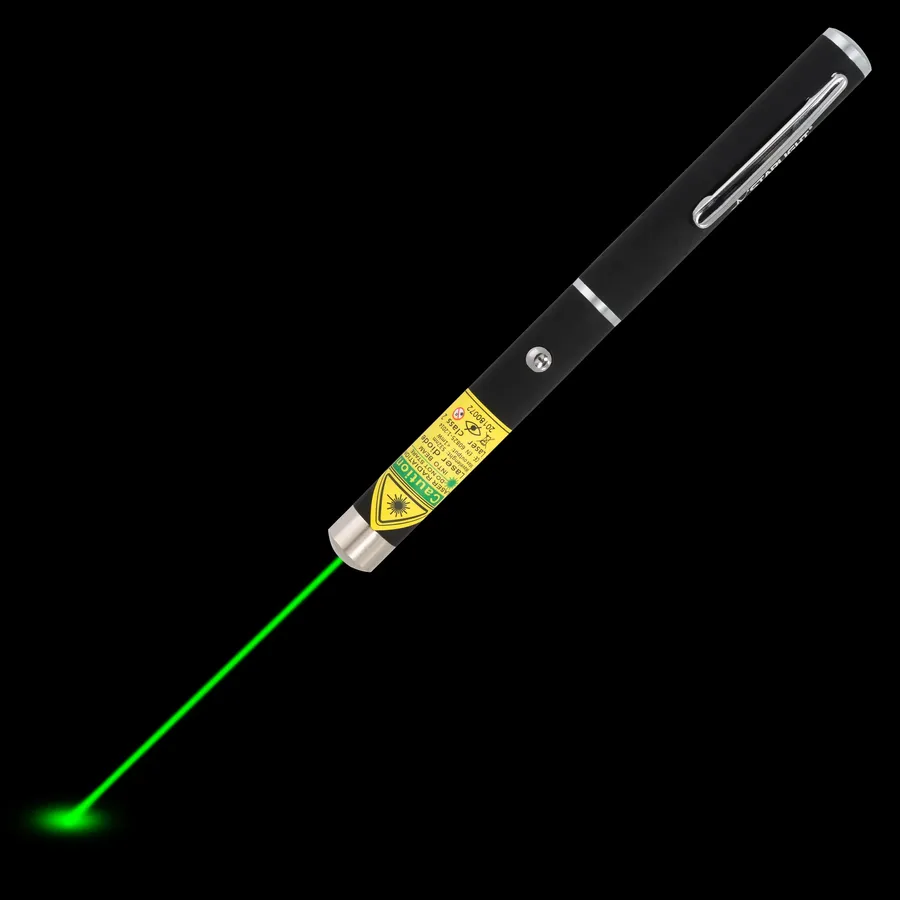


Ireland has some genuinely dark skies, from the Kerry coast to the bogs of Mayo and the hills of the midlands, and on a clear winter night the view can be spectacular. The challenge is sharing it: "just left of that bright one" rarely works. A green laser pointer solves that. In dark, slightly humid air a faint line of the beam is visible near the laser, so the people next to you can follow it up towards the star you mean. The dot itself is visible at around a kilometre on surfaces in the dark (indicative).
Green is the only colour that manages this. At the same class 2 output, red and violet look far fainter, and their beams are practically invisible in the air.
| Conditions | Dot visible up to |
|---|---|
| Indoors (room, hall) | 30 m+ |
| Daylight, dot on a shaded spot | approx. 100 m |
| Twilight | approx. 300 m |
| Full darkness | approx. 1 km |
All class 2, max. 1 mW. Cold drains batteries faster, so keep a spare cell in an inside pocket on winter nights: the PowerFox 18650 2-pack fits the G3 Pro and G1 Pro.
A class 2 laser shows a faint beam only in dark, slightly damp air. In light-polluted towns or under a bright Moon, you may see just the dot on nearby surfaces and little or nothing of the beam in the sky. That is physics, not a faulty laser. Read how far a class 2 laser pointer reaches for more on visibility, and follow laser pointer safety at all times. Planning a gift for a stargazer? See laser pointer gift.
New to pointing out the sky? Start with objects everyone can find. The Plough is easy most of the year and leads you to the Pole Star. In winter, Orion with its belt of three stars is unmistakable and points down to Sirius, the brightest star in the night sky. Bright planets such as Jupiter and Venus are perfect for a first session because they do not twinkle and they stand out clearly. Use your green laser to trace a line from one recognisable shape to the next, and your audience will quickly learn to find their way on their own. A star map or app beside you helps you check names before you point.
Not the biscuit kind, just small files that make the shop easier to use and help us improve it. We never sell your data. You choose what you allow. Privacy policy
AI assistant: can make mistakes. Prefer a person? Just ask.