
How far does a class 2 laser pointer reach – and how bright is it really?
Real-world distances for green, red and violet class 2 laser pointers by day, at dusk and in the dark, and why the numbers online are often fiction.
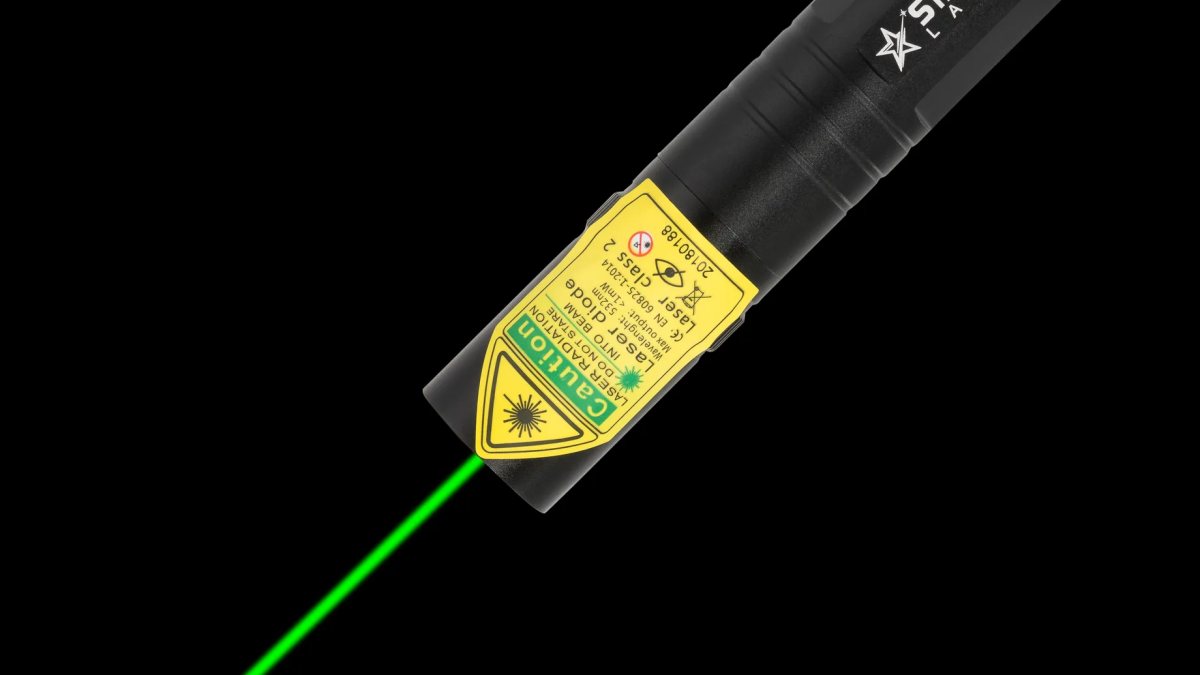
"What range does it have?" is usually the first thing people ask about a laser pointer. It is also the one with the most misleading answers online, where cheap lasers claim to reach the Moon. This article gives you honest, indicative distances for class 2 laser pointers and explains the physics behind them, so you know exactly what to expect before you buy.
First: what does class 2 mean for brightness?
A class 2 laser emits visible light with an output of at most 1 mW. That limit is set so that the natural blink reflex normally protects the eye from a brief, accidental exposure. One milliwatt sounds modest, yet laser light is concentrated in a narrow beam, so even this small output produces a dot that stays visible over remarkable distances, especially in the dark.
How bright the dot looks depends far more on colour than on output. The human eye is most sensitive to green light around 555 nm. Green at 532 nm is close to that peak, red at 650 nm sits further down the curve, and violet at 405 nm is at the very edge of vision. At the same 1 mW, green therefore looks several times brighter than red and far brighter than violet.
Distances per colour
The figures below are indicative. They describe how far away you can still see the dot on a suitable surface, not how far light physically travels (which is much further).
| Conditions | Green 532 nm | Red 650 nm | Violet 405 nm |
|---|---|---|---|
| Indoors | 30 m+ | 30 m | 20 m |
| Daylight, shaded surface | approx. 100 m | approx. 30–50 m | approx. 10 m |
| Twilight | approx. 300 m | approx. 100–150 m | approx. 50 m |
| Full darkness | approx. 1 km | approx. 300–500 m | approx. 200 m |
Why daylight is so much harder
Your eye judges a laser dot against its surroundings. In darkness the dot is the brightest thing in view, so even a faint spot stands out at a kilometre. In daylight the sun lights up everything around the dot, and the contrast collapses. That is why a class 2 dot on a sunlit wall disappears at a few dozen metres, while the same dot on a shaded gable remains visible at around 100 m. Tip: always aim for shade in daytime.
Dot versus beam
People often ask whether they will see the beam itself, the "lightsaber" line. With a class 2 laser the honest answer is: only a little, and only with green. The beam becomes visible when light scatters off particles in the air, such as moisture or dust. On a dark, damp night a green class 2 laser shows a faint line near the laser, which is enough to guide someone's eye towards a star. Red and violet beams at this class are practically invisible. Indoors you mainly see the dot.
What affects the range
- Ambient light: the single biggest factor. Darkness multiplies the visible range.
- Surface: pale, matt surfaces reflect the dot well. Dark, wet or glossy surfaces absorb or scatter it.
- Weather: rain and fog scatter light; you see more beam but less dot in the distance.
- Your hand: at a kilometre, a tiny wobble moves the dot by metres. Rest your arm on something solid.
- Battery level: a nearly flat battery can make the dot dimmer. Charge or replace in good time.
What about the extreme claims online?
Listings that promise ranges of tens of kilometres usually describe how far light travels in theory, not how far you can see a dot. Others involve lasers far above class 2, which are not designed for consumers and can injure eyes in a fraction of a second. Neither is useful for stargazing, presenting or pointing. A green laser pointer in class 2 already covers those jobs. Laser classes explained sets out why stronger is not better.
Which model for which distance?
Our green models, all with this indicative range
| Conditions | Dot visible up to |
|---|---|
| Indoors (room, hall) | 30 m+ |
| Daylight, dot on a shaded spot | approx. 100 m |
| Twilight | approx. 300 m |
| Full darkness | approx. 1 km |
- Up to a lecture hall: any model; the M1 red pen is a classic.
- Across a field at dusk: green, ideally the rechargeable G3 Pro.
- Stars and long distances at night: G3 Pro, G1 Pro or the compact G2 Pro.
- Close-up effects: the violet Z1 or V1 Pro.
Three quick tests you can do yourself
Want to see the effect of light conditions with your own eyes? Try this with any green laser. First, put the dot on a white wall in your garden at midday and walk away until it disappears. Second, repeat the walk on a shaded wall, and notice how much further you get. Third, go back half an hour after sunset. The same laser, the same wall, and suddenly the dot holds up at several times the distance. Nothing about the laser changed; only the contrast did. That simple experiment explains every range table you will ever read.
Bottom line
A class 2 green laser pointer gives you a dot visible at roughly a kilometre in darkness, 300 m at twilight and 100 m in the shade by day. Red reaches less, violet less again. Those honest numbers are enough for almost everything people actually do with a laser pointer. For practical guides see long range laser pointer and astronomy laser pointer, and always follow laser pointer safety.
More articles
Blog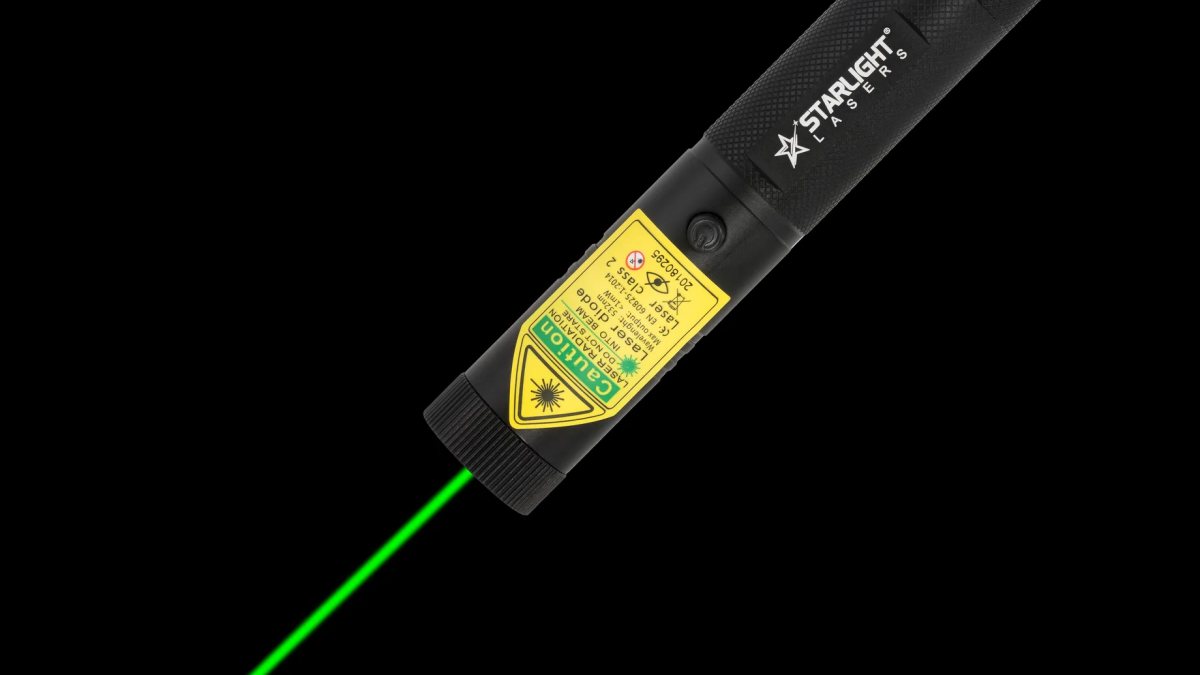
Laser pointer buying guide for Ireland: how to pick the right one
Colour, shape, battery and safety: a clear, step-by-step guide to buying a laser pointer in Ireland without wa…
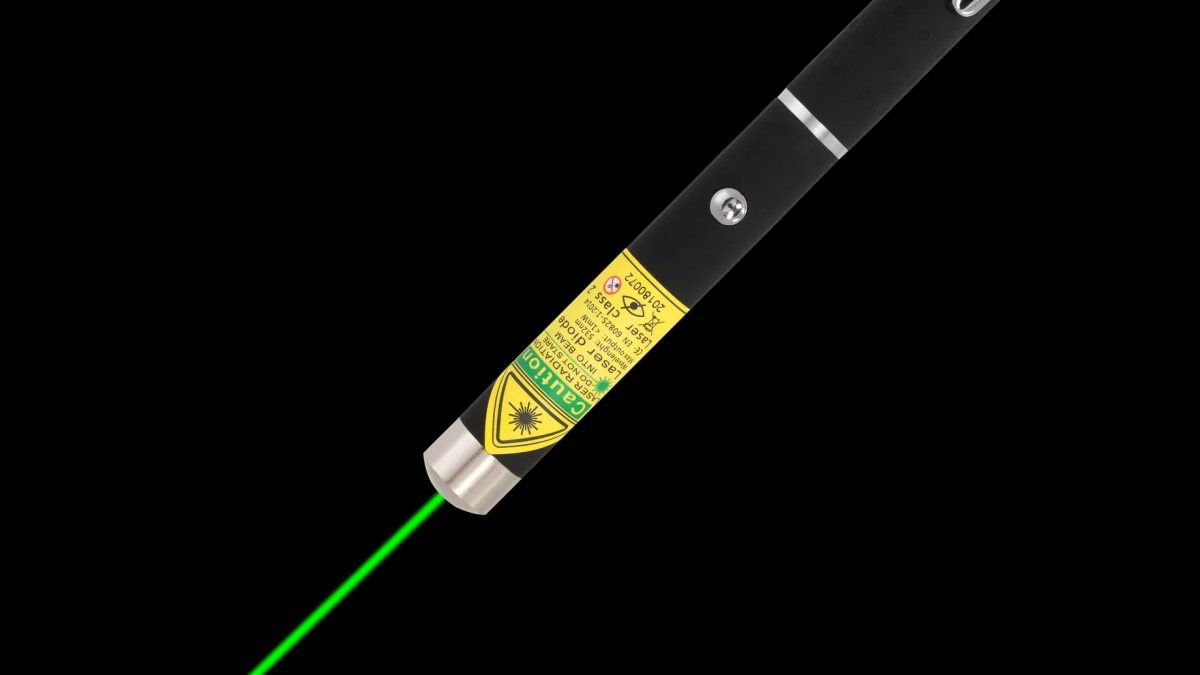
Green vs red vs violet laser pointer: which colour should you buy?
Green, red or violet? How the three laser colours differ in brightness, range and use, and which one suits you…
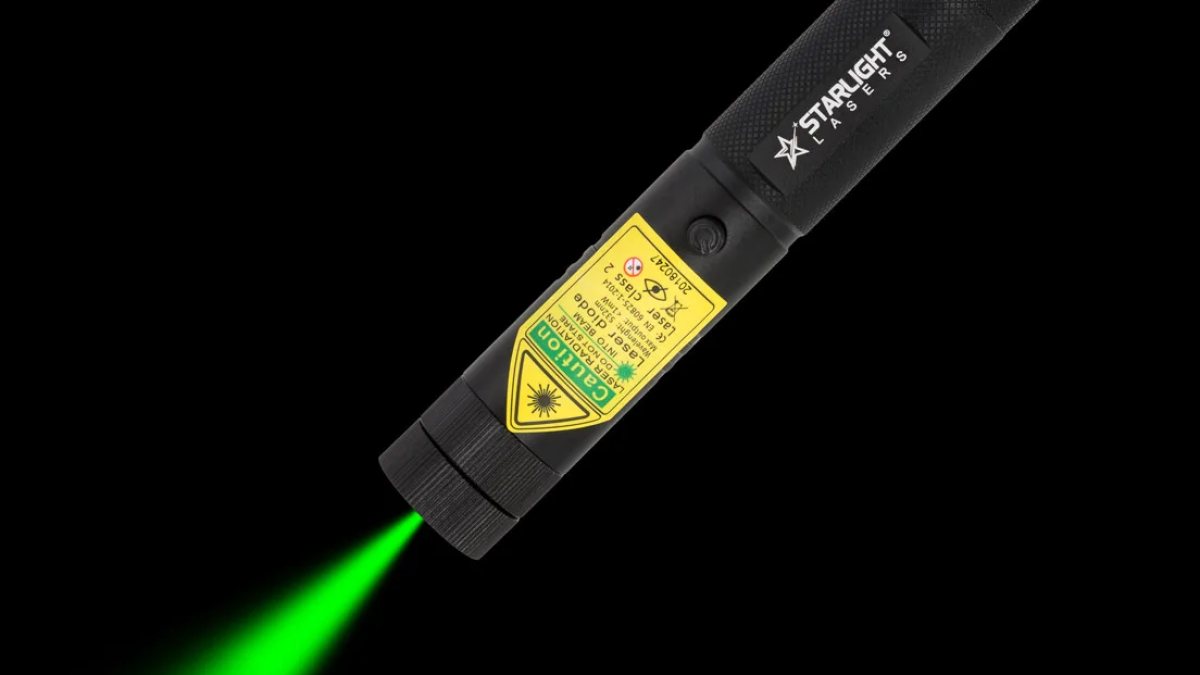
Rechargeable or AAA laser pointer? 18650 and 16340 cells versus AAA
Should your laser pointer run on AAA batteries or a rechargeable 18650 or 16340 cell? A practical comparison,…