
Laser pointer eye safety: what class 2 means for your eyes
Could a laser pointer hurt your eyes? What the blink reflex does, why class 2 is the consumer class, and the rules that keep everyone safe.
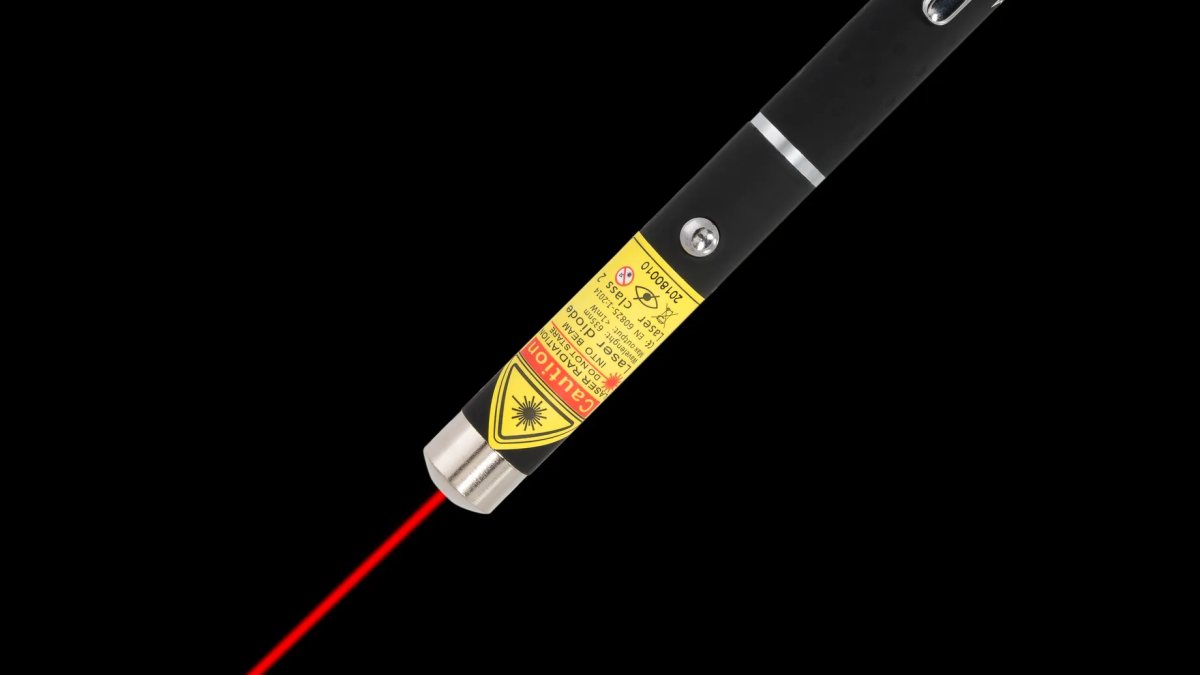
Laser pointers are useful tools, but the beam goes straight into the eye if you look into it, and the eye focuses light onto a tiny spot on the retina. That is why eye safety is the first thing to understand before you buy or use one. This article explains what class 2 means, why it is considered suitable for consumers, and which habits keep you, your family and others safe.
How a laser can harm the eye
The lens of the eye concentrates incoming light onto the retina. With ordinary light, the energy is spread out. With a laser, the beam is narrow and parallel, so the lens focuses it into a very small, intense spot. If the power is high enough, that spot can heat and damage the retina within a fraction of a second, and retinal damage is often permanent. The risk therefore depends heavily on the laser's output and on how long the light enters the eye.
What class 2 means
Lasers are classified under the international standard EN 60825-1. Class 2 covers visible lasers with an output of at most 1 mW. At that level, the natural aversion response – blinking and turning away – normally protects the eye against brief, accidental exposure, which takes around a quarter of a second. That is the basis on which class 2 is the class intended for consumer laser pointers.
Note the word "normally". Class 2 is not designed for deliberate staring. If someone forces themselves to look into the beam, or suppresses the blink, the protection no longer applies. Some people also blink less quickly, for example when tired or under the influence of alcohol or medication. The safety margin is real, but it depends on sensible behaviour.
Why stronger lasers are a different story
Above class 2, protection by the blink reflex is no longer reliable. Class 3R allows up to 5 mW of visible light, and higher classes go much further. Many lasers sold online with no label at all fall into those higher classes, sometimes far above them. Such lasers can injure an eye before a person can blink, and reflections from glass or water can be hazardous too. That is why we sell class 2 only, and why we advise against buying lasers without a clear class label. Laser classes explained goes through all classes in detail.
Ten rules for safe use
- Never look into the beam, and never aim at anyone's eyes.
- Never point at people, even as a joke.
- Never point at animals' eyes; with pets, keep the dot on the floor.
- Never aim at vehicles, cyclists, trains, aircraft, helicopters or drones.
- Avoid mirrors, windows, water and polished metal that can reflect the beam.
- Switch off when you are not actually pointing.
- Keep laser pointers away from children; a laser is never a toy.
- Use the safety key on models that have one, and remove it for storage.
- Do not look at the beam through binoculars or a telescope.
- Buy only lasers with a clear class label and stated output.
What to do after an accidental exposure
A brief, accidental flash from a class 2 laser usually causes nothing more than a temporary after-image, similar to looking at a camera flash. It should fade within minutes. If you notice lasting blurred vision, a dark or blind spot, or the after-image does not go away, contact a doctor or optician promptly and mention that a laser was involved.
Children and laser pointers
Children are curious and do not understand the risk of staring into a light. They also tend to point things at each other. That is why you must be 18 or over to order from us, and why we recommend storing laser pointers out of reach. If there are children in the house, a model with safety keys such as the G3 Pro or R1 Pro adds an extra barrier.
Pets
Many people use a laser pointer to play with a cat. That is fine with sensible rules: dot on the floor, never in the eyes, short sessions, and a real toy at the end so the animal can catch something. See laser pointer for cats and dogs for the full guide.
Lasers and driving, flying and sport
A laser dot or beam in a driver's or pilot's field of view can cause glare, distraction and flash blindness at a critical moment, even at class 2. The same applies to cyclists, train drivers and players on a pitch. This is the most serious form of misuse, and there is never a reason to point a laser in their direction. Outdoors, always check what lies behind your target and in the line of the beam, and avoid pointing upwards near airports, heliports or flight paths. When you hear or see an aircraft, switch off. The same goes for drones, which are increasingly common over parks, beaches and events, and whose pilots rely on a clear view of a screen or the sky.
Our safety promise
Every laser we sell is a Starlight Lasers model in class 2 with max. 1 mW, tested before dispatch, with a class warning label on the housing. We prefer to tell you honestly what a laser can do rather than sell you something that could hurt someone. You remain responsible for safe use. Read our full laser pointer safety page, and for distances see how far does a class 2 laser pointer reach.
More articles
Blog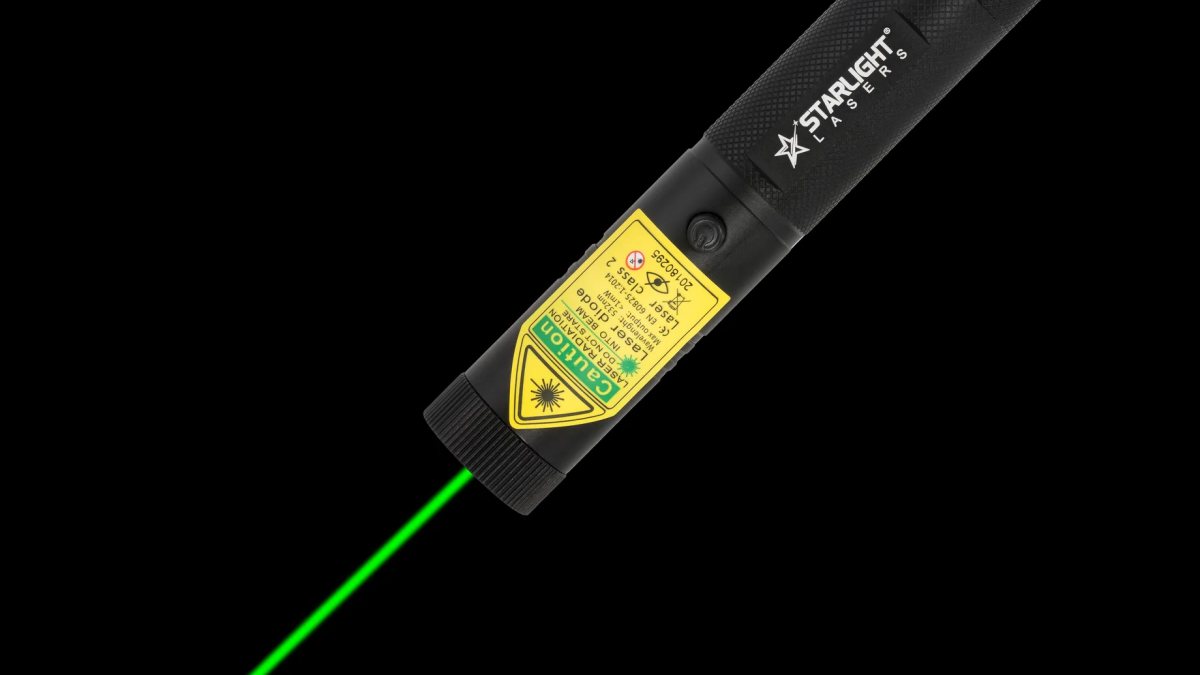
Laser pointer buying guide for Ireland: how to pick the right one
Colour, shape, battery and safety: a clear, step-by-step guide to buying a laser pointer in Ireland without wa…
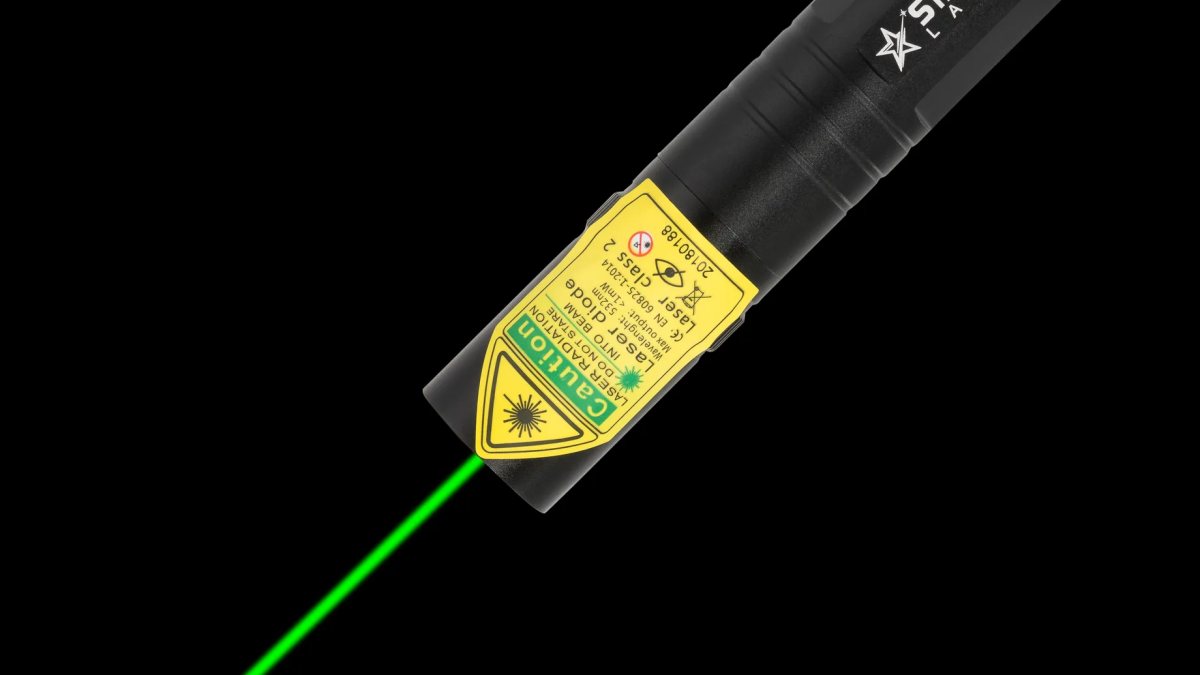
How far does a class 2 laser pointer reach – and how bright is it really?
Real-world distances for green, red and violet class 2 laser pointers by day, at dusk and in the dark, and why…
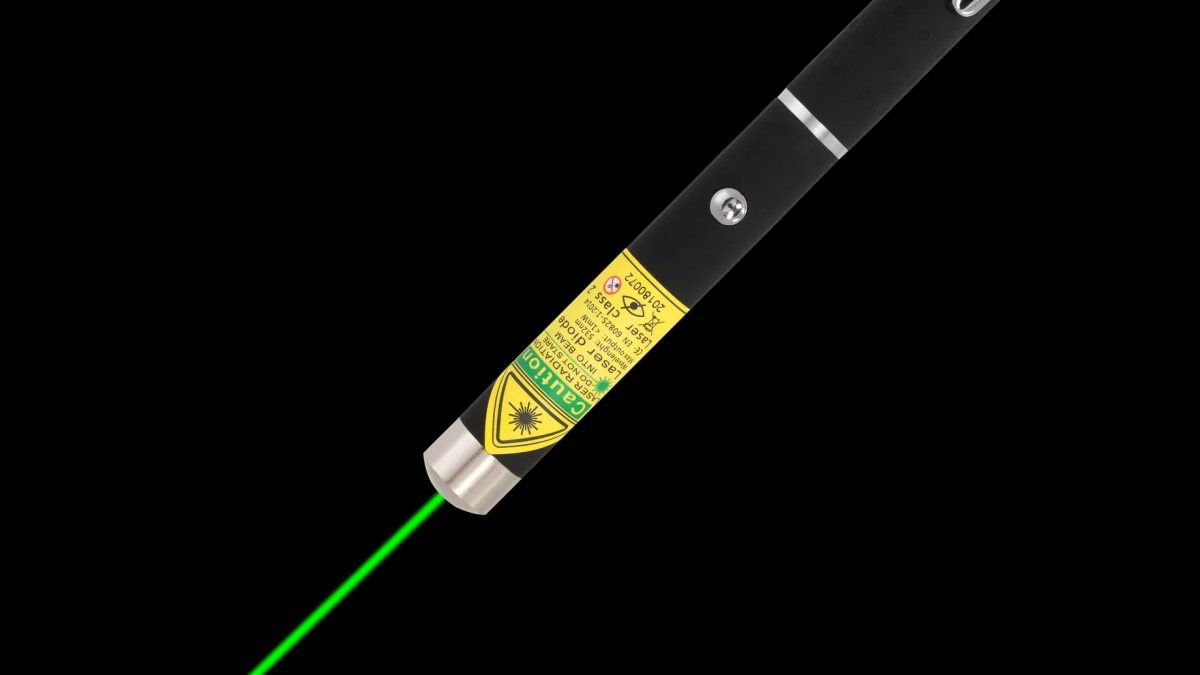
Green vs red vs violet laser pointer: which colour should you buy?
Green, red or violet? How the three laser colours differ in brightness, range and use, and which one suits you…